


On behalf of myself and my CRLT colleagues, I’d like to welcome you to the fall term. In preparation for the first days of class and beyond, this blog post highlights two topics that are particularly timely: talking with your students about expectations around GenAI; and implications of the fall 2026 midterm elections for your course planning. Below you will find suggestions and resources for ways to address these topics that are specific to your courses and students. And as always, CRLT consultants are available to speak with you about these or other topics as you prepare to teach. You can request an appointment through the CRLT website or by emailing crlt@umich.edu.

How will you talk with your students about expectations (yours and theirs) around GenAI?
In a fall 2025 survey about perceptions of and experiences with GenAI conducted by Professor Josh Pasek in collaboration with CRLT, U-M undergraduates reported encountering a patchwork of course policies and approaches, from not allowing AI at all (61%) or requiring explicit disclosure of its use (61%), to permission for select processes (47%) or assignments (41%), to unclear policies (20%), or no policy at all (25%). (Full survey results are available on this page.)
In many ways, this makes sense, as expectations differ by discipline and by instructors’ perspectives on the utility or even legitimacy of GenAI usage. That said, given the potential for confusion as students move across multiple courses, you and your students would be well served by clarifying expectations in your courses. There are a number of strategies you can adopt:
Include a GenAI statement in your syllabus and discuss with students, often: If this is a new addition for you or you’re considering revising your statement, you might find these sample statements from Political Science useful. Compiled by Thurnau Professor Mika LaVaque-Manty, they represent a continuum from permissive to restrictive. LSA Senior Assistant Dean Kelly Maxwell collected a wider range of syllabus statements from natural science, social science, and humanities courses. In all cases, try to read the statement from the perspective of students who are not experts in your discipline to make it as transparent as possible. As with any syllabus statement, it will be more effective if you take time early in the term to review it with students and return to it at key points, especially in advance of assignments to explain how it applies.
Connect discussions of AI to student learning: Given their easy access to AI tools, students may not have considered the implications for their learning of overdependence on AI. There is ample evidence that struggle and failure are key components of learning and that practice retrieving and recalling what you’ve learned are essential to long-term learning1. Recent research also confirms what many of us have assumed: excessive “cognitive offloading”–delegating too much of the work of completing assignments to GenAI–undermines those processes and the development of critical thinking and the course-specific knowledge, skills, and habits of mind that will be necessary for future success in a discipline or a post-graduation career2. You can share this information with students, distinguishing between beneficial (e.g., grammar correction, brainstorming ideas) and detrimental (the actual thinking/writing/problem solving) uses. This article (Vendrell & Johnston, 2026) reviews the literature on the effects of AI usage on student thinking and suggests a framework and concrete strategies to preserve “cognitive friction” in assignments.
Explain disciplinary norms around citations: Although intellectual honesty is a core value across disciplines, many students do not fully understand how the specifics of citation underlie those values. If you do not allow AI usage, or expect disclosure of usage, connecting that requirement to a broader discussion of academic integrity and citation practices in your discipline can be quite helpful beyond this single technology. Finally, please note that some students are themselves hesitant or even opposed to AI usage. If you have assignments that include AI-based tools, it is worth explaining how they will help students learn in the course and even providing options for those who prefer to avoid GenAI entirely.
Address student concerns about peer behavior: The fall 2025 undergraduate survey revealed an important perception gap: Only 20% of students say they always or usually use AI, while 74% believe their peers do. Similarly, while78% report always or usually adhering to AI policies, 80% perceive that their peers never, rarely, or sometimes follow AI policies. This disparity may involve some combination of a desire to answer in socially acceptable ways and a fear of losing out to peers. Nonetheless, sharing the data with students can counter the perception that they will be at a disadvantage if they do not turn to AI but their peers do.
Resources: For additional resources, visit the GenAI section of our website, where you will find links to upcoming workshops, U-M’s GenAI apps (UM-GPT, Maizey) and U-M’s GenAI resources. Finally, the self-paced Canvas course, Teaching With GenAI, includes modules on prompt literacy, ethical considerations, and academic integrity. Also, keep an eye out for an upcoming CRLT blog post that will go into more detail on how to write and implement an effective GenAI syllabus statement that supports your learning goals.
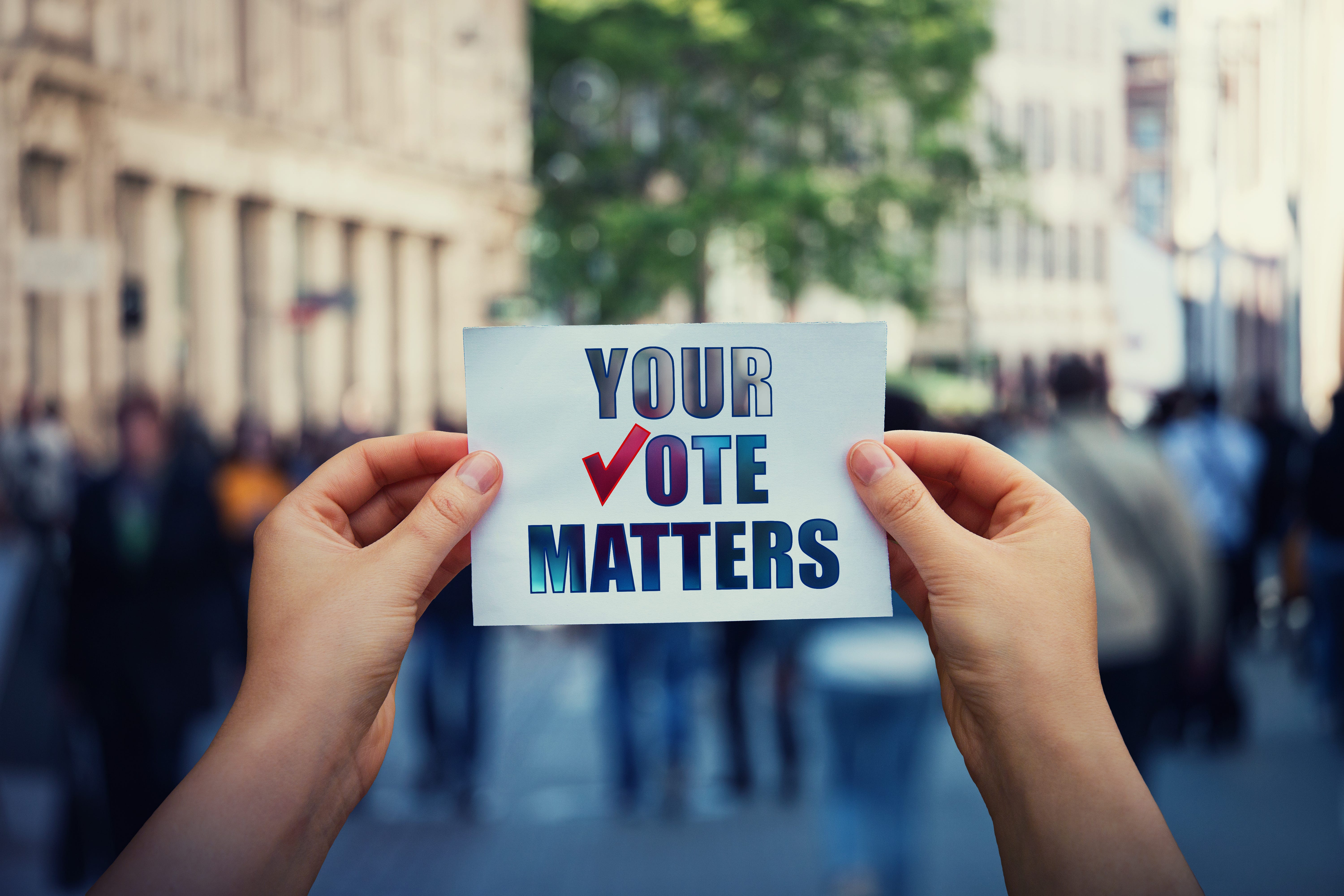
How might the upcoming 2026 midterm elections affect your course planning?
Once again this November, there will be an election that has major local, state, and national stakes. Given the current political landscape, this election season may be fraught, particularly with the possibility of contested results. While this can no doubt be a source of increased stress among students and instructors, it also offers a potential for learning opportunities. As you consider how the elections might impact your courses, these resources should be helpful.
Take advantage of instructor resources and programming: CRLT and The Ginsberg Center are excited to collaborate this fall on three events for instructors as part of our Promoting Democracy Teaching Series (PDTS):
Teach for Democracy: Facilitating Constructive Dialogue in an Age of Polarization with Dr. Nicholas Longo, inaugural director of the Rutgers Democracy Lab, Monday, 9/14, 12-1:30pm
Making the Most of ‘Hot Moments’: Election Edition, Wednesday, 10/7, 2026, 10am-12pm
Teach for Democracy: Deliberative Pedagogy in Practice, Friday, 10/16, 10-11:30am)
Promote civic learning in your course: You can consult a number of campus resources to gather ideas for your teaching.
A CRLT blog post describes examples from faculty in disciplines ranging from comparative literature and classics to nuclear engineering and nursing.
Ginsberg’s “How much time do you have” webpage offers suggestions based on how much class time you can dedicate to this topic.
The UMich Votes Faculty/Staff Page contains, non-partisan, ready-to-use syllabus language and slides to encourage student voting.
You can encourage students to explore events that are part of U-M’s Democracy Week (September 14 - September 18, 2026). This includes invited speakers, screenings on the Diag, a campus-wide scavenger hunt, and a “Party for Democracy” resource fair.
Prepare for complex reactions (including your own): Discussions around the elections can often elicit intense emotions since they connect to deeply held values, as well as issues that have tremendous personal implications for both students and instructors. These CRLT Guidelines for Discussing Difficult or High-Stakes Topics offer practical advice on ways to conduct such discussions productively. The guidelines also touch on strategies for handling discussions when they arise spontaneously, a topic this resource sheet on hot moments handles in more depth.
For a summary of the literature on failure, see this Rawle 2025 article. A summary of research on desirable difficulties is discussed in this article by Bjork and Bjork. [This site actually has a ton of material on this topic, but I’m not sure if it’s better than some original writing.]
For a summary of research on this topic, see this report from the Australian Network for Quality Digital Education: Artificial Intelligence, Cognitive Offloading and Implications for Education (Lodge & Loble, 2026).

Dr. Matthew Kaplan is Vice Provost for Learning and Teaching and Executive Director of CRLT. He works closely with leadership at U-M to identify and respond to emerging needs, most recently around student success and GenAI with the Inaugural Vice Provost for Undergraduate Education. Internally, he chairs CRLT’s Senior Leadership Team, partnering with CRLT’s directors on strategic direction for the center. Nationally, he collaborates with fellow center directors in the Ivy Plus and Big Ten networks. Matt received his Ph.D. in comparative literature from the UNC Chapel Hill. He has published on the academic hiring process and metacognition, and he co-edited Advancing a Culture of Teaching on Campus: How a Teaching Center Can Make a Difference (Stylus Publishing, 2011) with former CRLT Executive Director Connie Cook.